The thought often comes in a quiet moment. Your grandchild has just been collected, the house is still, and you think: there is so much I want to tell this child, and so little of it fits into one afternoon. Some of it they will only understand when they are older. Some of it you would never dare to say out loud. A letter can carry both.
And a letter has something no phone call or voice message has: it stays. In twenty years it can be pulled out of a drawer, in your handwriting, and for that moment you are there again.
What belongs in the letter
There are no rules. But these are the things that turn a letter into one that gets kept:
- One specific memory you share. Not "we had so many lovely times", but the one thing: the afternoon by the stream, the first ice cream, the sentence your grandchild said that you will never forget. The more exact, the more it is worth.
- What it was like when they arrived. Where you were when you heard about the birth. What you thought the first time you held them. Nobody else will tell them that.
- Something from your own life. What you were like as a child, what you got up to at eight, what you were afraid of. To your grandchild you have always been old. Show them that isn't true.
- What you wish for them. One or two sentences, not a guide to life. "I hope you are brave" weighs more than a page of advice.
- What they give you. The part that is said least often. That their visits give you strength. That you think of them when they are not there.
How to start
The first line is the highest hurdle, so take the weight off it: don't start at the beginning. Write down the memory that came to you the moment you started reading this. The rest will arrange itself around it.
Write the way you talk. Your grandchild should hear your voice when they read it, not the voice of a greetings card. If you wander off the point when you tell a story, wander off in the letter too. That is exactly what they will love most about it later.
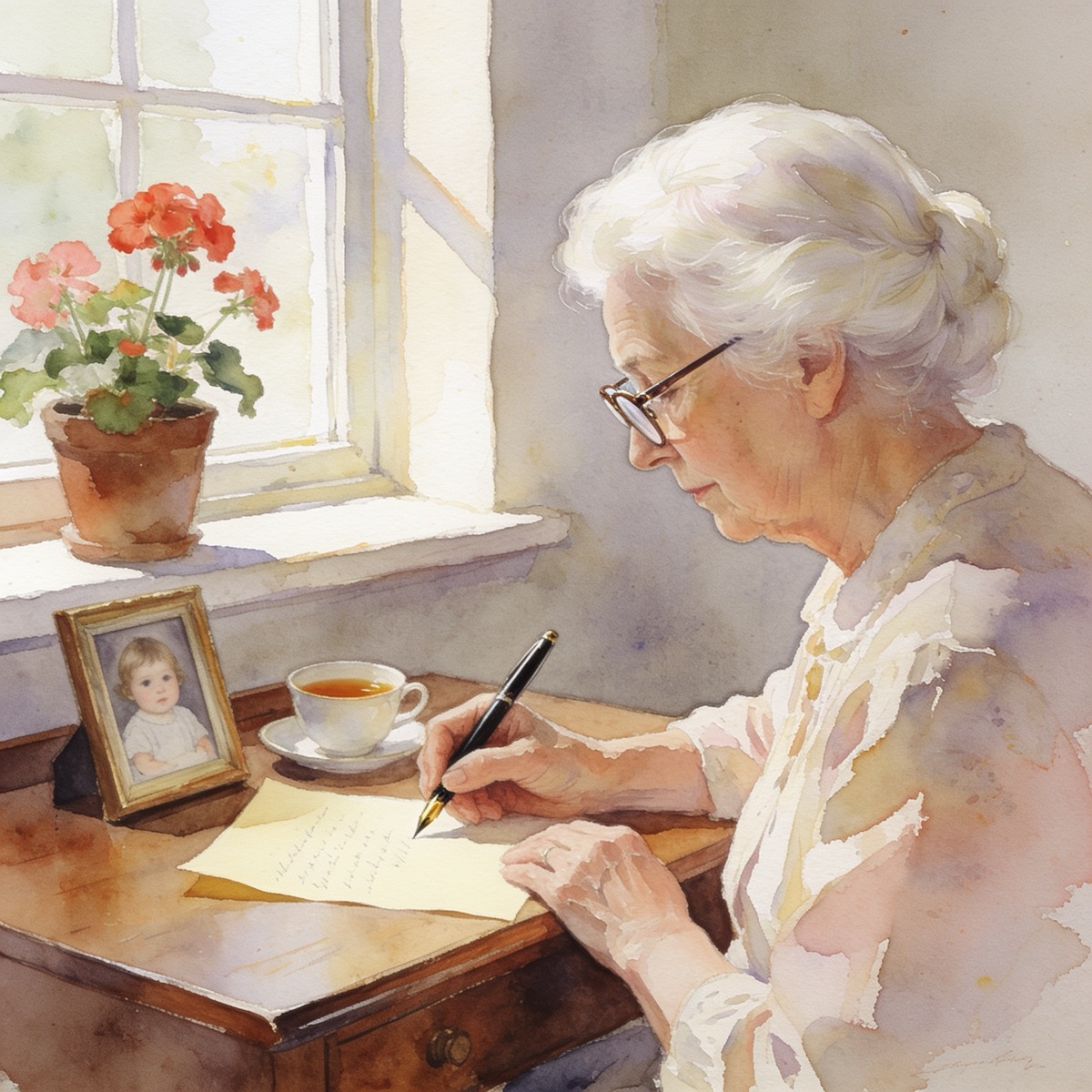
And write by hand, if your hand will let you. Handwriting is a piece of you on paper. If writing is hard, speak the letter as a voice message and ask someone to type it up. The words matter, not the form.
Occasions that make it easier to start
- At the birth or christening: a letter that waits until the child can read it.
- Starting school, or a big birthday: short and specific, with a memory from the year just gone.
- The 18th birthday: the big letter. Many people write it years ahead and put it away.
- Their wedding day: what you remember of them as a child, and what you wish for the life they are starting.
- No occasion at all: the best letters come out of nowhere. "I thought of you today" is a complete reason.
An example letter
Here is what a short letter can look like, from a grandma to her granddaughter on her seventh birthday. Take it as a prompt, not a template: only your own memories make it yours.
Dear Ellie,
Today you are seven. Do you know what I thought first, when I held you in the hospital? That you have exactly the same serious eyebrows as your grandad. You still have them, especially when you are counting biscuits.
When I was seven, we lived in a house with a pear tree in the garden. I climbed it every day, although it was strictly forbidden, and once my dress got caught on a branch. My mother didn't forgive me for a long time.
I hope you are brave enough to climb trees, even the ones everyone says are too high. And I hope you know: if you fall, there is always someone here to catch you.
Your visits are the best part of my week. When you leave, it is very quiet here, and I am already looking forward to the next time.
Lots of love on your birthday,
Grandma
All five points from above are in it: a memory you share, the birth, a piece of your own life, a wish and what the child gives you. And it is still short. That is all it takes.
When it wants to be more than a letter
Some people notice it while they write: it's too much. A letter holds one moment, one wish, one memory. But a childhood in another time, your first job, the story of how you became the family this grandchild has today: that won't fit on any writing paper.
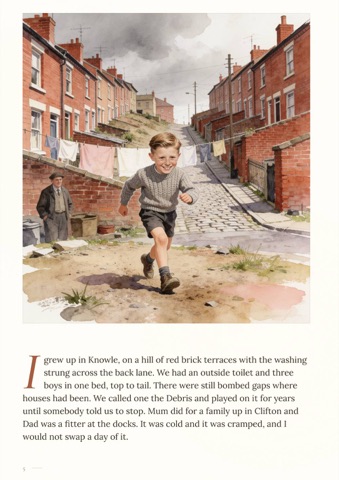
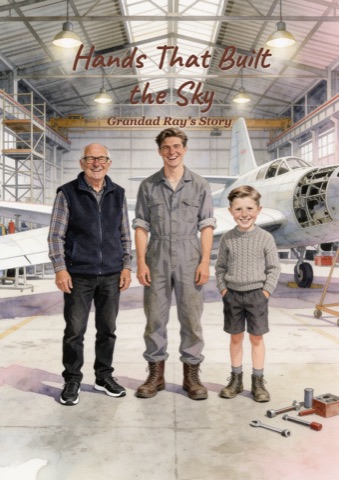
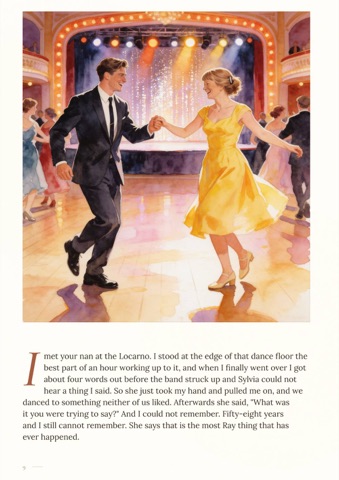
That is what Memolio is for. Your stories become an illustrated hardcover book about your life: 24 pages, painted in watercolour, with your face on every page, made from your memories and your family photos. You answer questions in a web form for around 30 minutes, by voice message if you like, just as you would tell it. It works best together: your daughter or son asks, you tell.
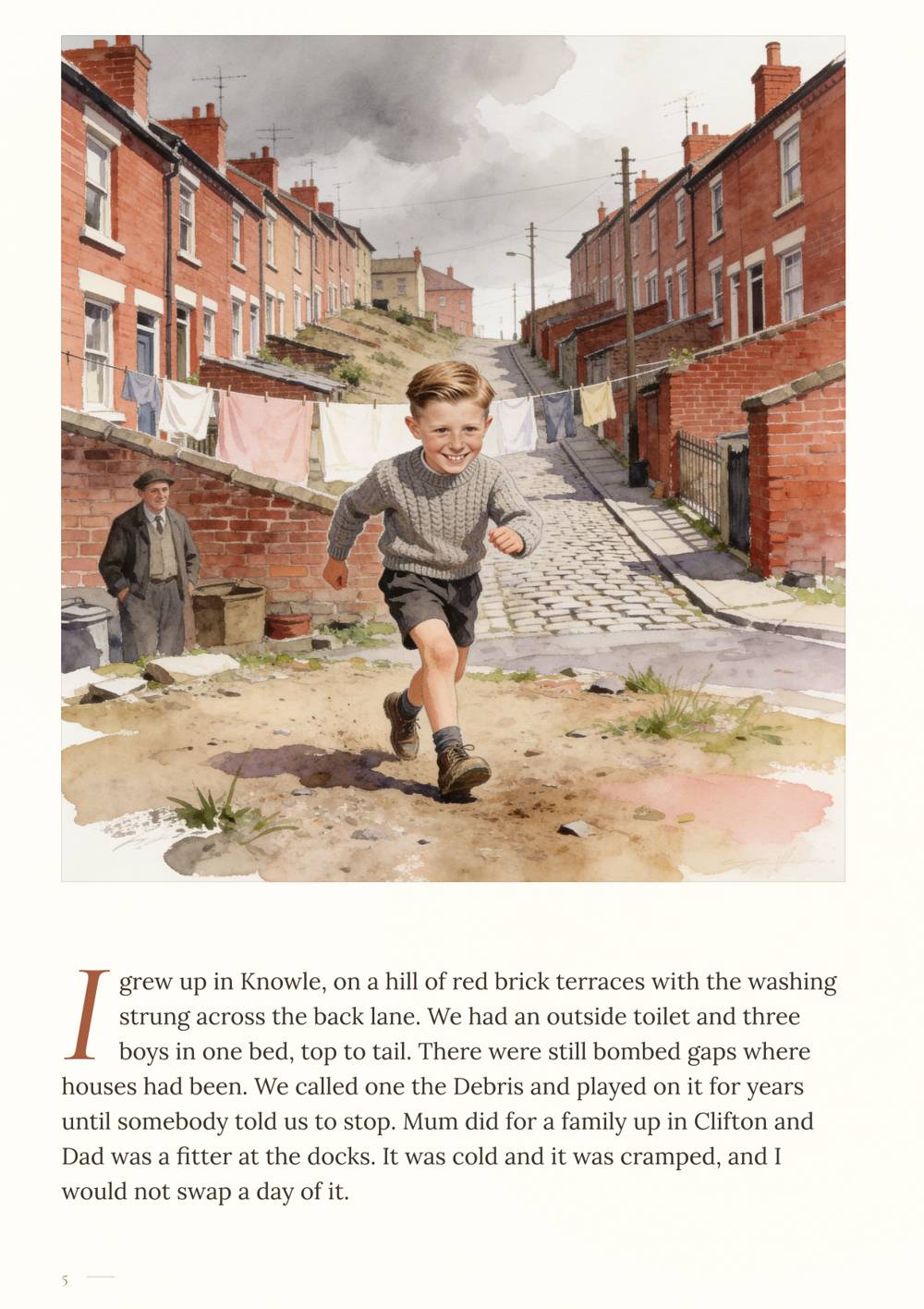
The AI writes and paints the book in 30 minutes to 2 hours. Then you check every page at your own pace, with up to 50 free regenerations. Nothing prints until you approve it. 5–10 working days (EU + UK; US around 7–10 working days) later the hardcover arrives, about 2 weeks in all. It costs £45 / $55 incl. VAT, with free delivery. And the people who belong in your life can be in the pages too: your partner, your children, your grandchildren.
The letter and the book don't rule each other out, by the way. The book tells your life. The letter says the things that are only between you and this one child. Many people tuck it inside the front cover.